
- April 6, 2026
- Lovely Gautam
- 0
The market for SEO is in a transformation with a tectonic shift led by AI-driven search, where users are keen to get precise answers that satisfy their needs, making the process of searching for links obsolete.
According to digital marketing experts, this evolution has impacted roughly 25 percent of global search queries, including those in 2026. This clearly signals an urgency on the part of marketers and SEO technical personnel to prepare themselves and their systems for AI-driven SEO shifts.
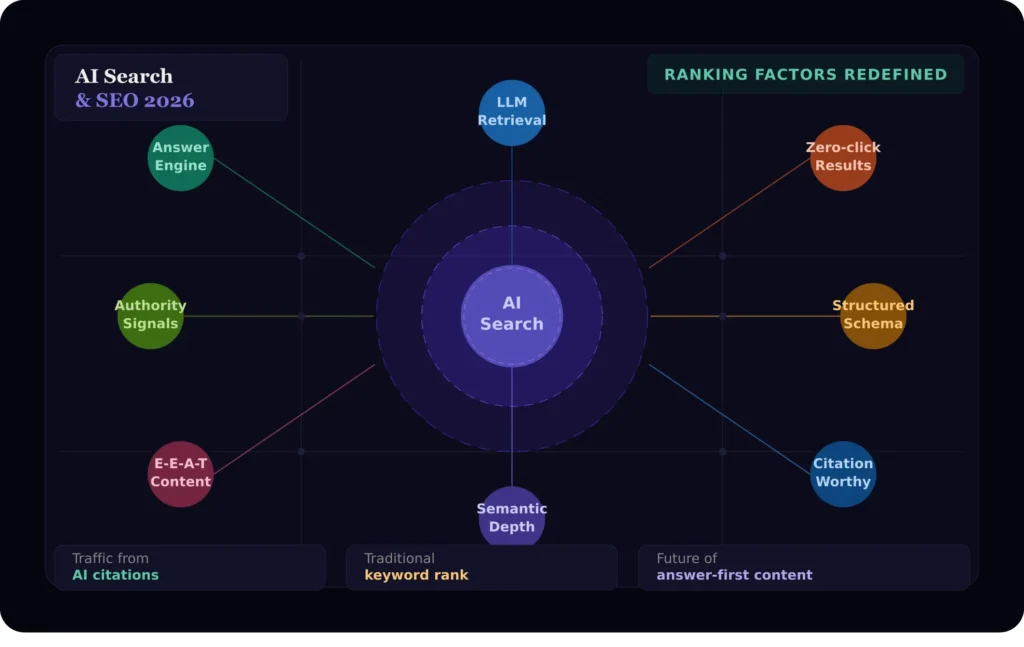
This means to stay ahead in the competitive market, it is important to know the critical areas where artificial intelligence (AI) has made inroads and is vigorously redefining the contours of the SEO market.
Some of the hallmarks of AI-driven search results and the future of SEO are that they are enhancing the quality of the user experience, which is becoming more conversational and efficient.
For website owners, reaping success in the AI climate demands readying for a shift from traditional Search Engine Optimization (SEO) to new strategies such as Generative Engine Optimization (GEO) and Answer Engine Optimization (AEO).
Reshaping User Experience (UX)
The AI integration into search engines like Google has been yielding AI overviews, with tools like Perplexity enriching the user journey faster and more interactively.
The complete summary or direct answer at the top of the results page helps users to click through many websites for detailed information. This marks a step beyond the old world of disjointed keywords, where users use natural language and use follow-up questions. The biggest advantage is AI maintains context and adds scope for deeper exploration without starting a new search.
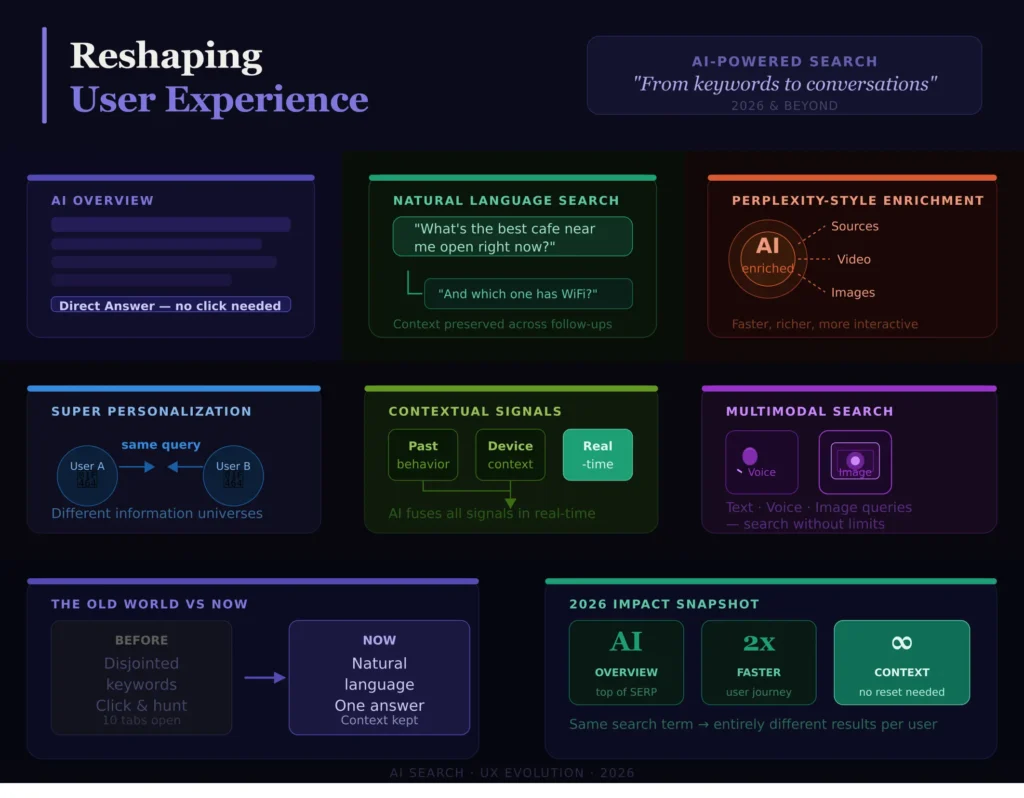
Super personalization with AI search in the manner in which search systems access a user’s past behavior, device, and location to offer results in real-time is amazing.
That is how in 2026, two people searching for the same term may see entirely different information universes. It is evident that the main impact in AI’s search is no longer limited to text, as it also explores voice commands and image-based queries to find information.
Impact on Content Optimization
It is clear that staying relevant and useful in an AI-dominated environment means websites must upgrade organically from simple “destinations” to “trusted data sources” in the AI environment.
In short, search engines under AI are moving from keywords to user intent to give the relevant answers. This makes keyword stuffing obsolete as the ideal rankable content is called upon to address specific user questions with viable answers that can satisfy the underlying intent behind a query.
Given that AI models prioritize content that demonstrates experience, expertise, authoritativeness, and trustworthiness, it travels to many tangents to dig out information, including detailed author bios, reputable sources, and a consistent brand footprint spread across multiple platforms.
That means websites need to provide unique value—such as proprietary data, first-hand case studies, or expert opinions—to stand out in the AI climate.
Correspondingly, there is a marked shift in metrics, with traditional KPIs like Click-Through Rate (CTR) and ranking position losing significance. The new hot variables for AI visibility are brand mentions and sentiment within AI-generated responses.
Broad Focus on User Intent and Authority
In the AI-driven search, the rising primacy of user intent is gracing all categories of queries. They cover the following.
- Informational searches
- Transactional searches
- Navigational searches
- Research-oriented searches
For sustained success with top results in search queries, the website content should mainly answer the underlying question of users or solve their problem rather than ritually repeating or recycling keywords, aspiring to higher ranking.
Topical Authority As a Critical Ranking Factor In Website Ranking
It is becoming apparent that in the AI search metrics, the success of a website is aligned to its capability on how comprehensively it addresses a subject. The practice of analyzing individual pages in isolation is gone. In its place, the advanced systems will assess the depth and interconnectedness of content on related topics across the site.
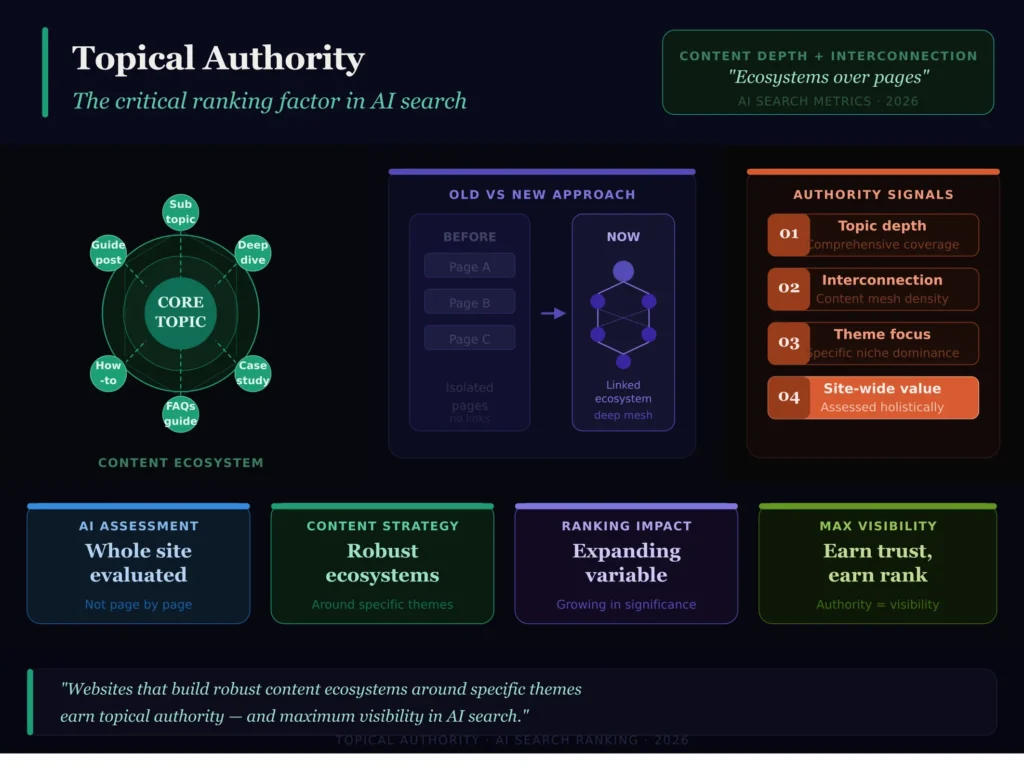
So, websites that provide value by building robust content ecosystems around specific themes stand to earn topical authority and maximum visibility. The space of topical authority is only going to expand as a significant variable in the dynamics behind higher rankings.
Search Queries Moving Beyond Keywords
The conversational search trends are entrenching themselves in the search arena. Voice search and AI-powered assistants are transforming user experience with search engines.
There is a big change in the format and structure of queries, and they are becoming increasingly conversational. Now, many reports suggest the bulk of the search engine users are moving towards a question-based approach rather than pushing for mere keywords.
For example, in the past a user may have typed “strategy web site performance.” Today, he or she will ask, “What are the best strategies for improving website performance?” How can businesses improve organic traffic in 2026?
This means websites optimizing for natural language queries and long-tail keywords stand to succeed in the realm of search visibility.
Structured Data To The Frontline
Similarly, structured data is another significant variable for increasing the efficacy of content interpretation by search engines. That means websites have to enable search engines to identify detailed information such as articles, FAQs, products, reviews, and events.
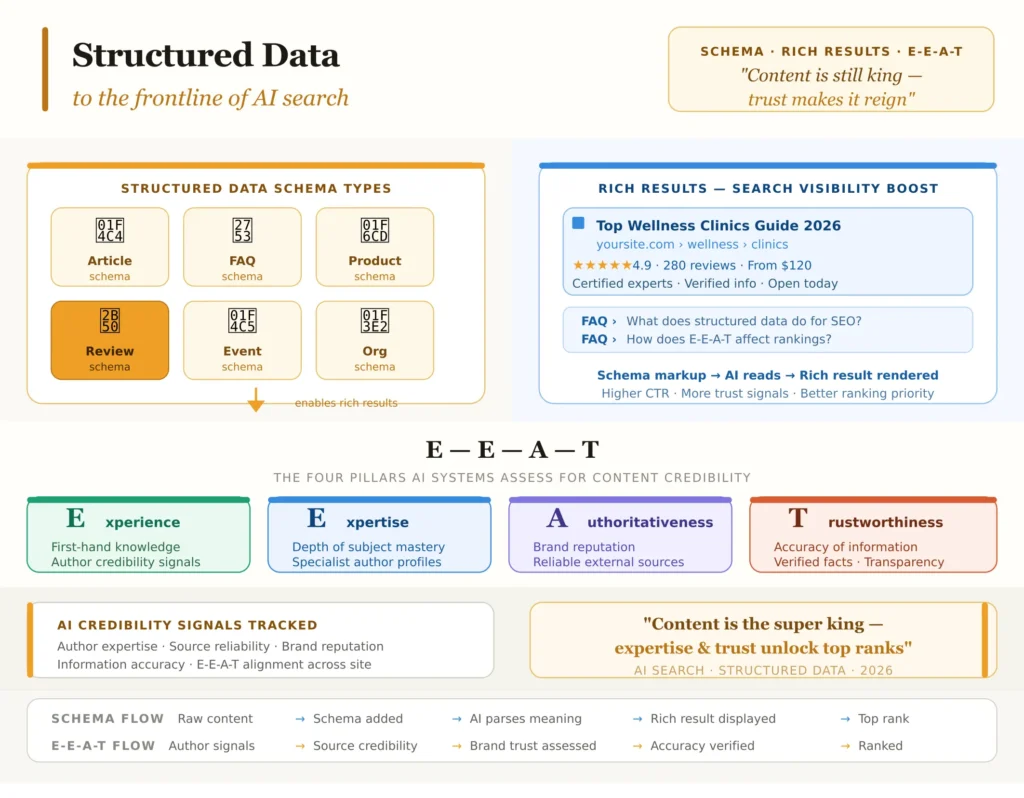
Well-configured structured data hikes visibility as it yields rich results and brightens the focus on E-E-A-T principles. In the AI era, search engines scan and prioritize content through the E-E-A-T lens, and they are Experience, Expertise, Authoritativeness, and Trustworthiness.
Since AI systems track multiple signals to ascertain the credibility of content from author expertise, reliable sources, brand reputation, and accuracy of the information, it is important that it want content to be the super king reflecting expertise and trust to sail into top ranks in search results.
Inspiring Case Studies
Many marketers and SEO companies worldwide are making that shift. There are inspiring case studies on that front. Examples include American SEO companies that pivoted from traditional keyword-stuffing techniques to Generative Engine Optimization (GEO) to secure prominent placements in the AI search interface, chatbots, and voice search.
Many of them have succeeded in delivering significant traffic surges to the clients. The case study of PlushBeds is interesting; it registered over a 700 percent surge in LLM, or large language model traffic in 150 days.
The marketing company deployed a generative AI tool named Alby on its product pages and expanded time spent by customer on the site and improved its search engine ranking.
So, to sum up, the writing on the wall is clear: when you find your traditional SEO methods are not giving the desired results and clients the aspired ROI too, the message is loud that it is time to move with the times.
